

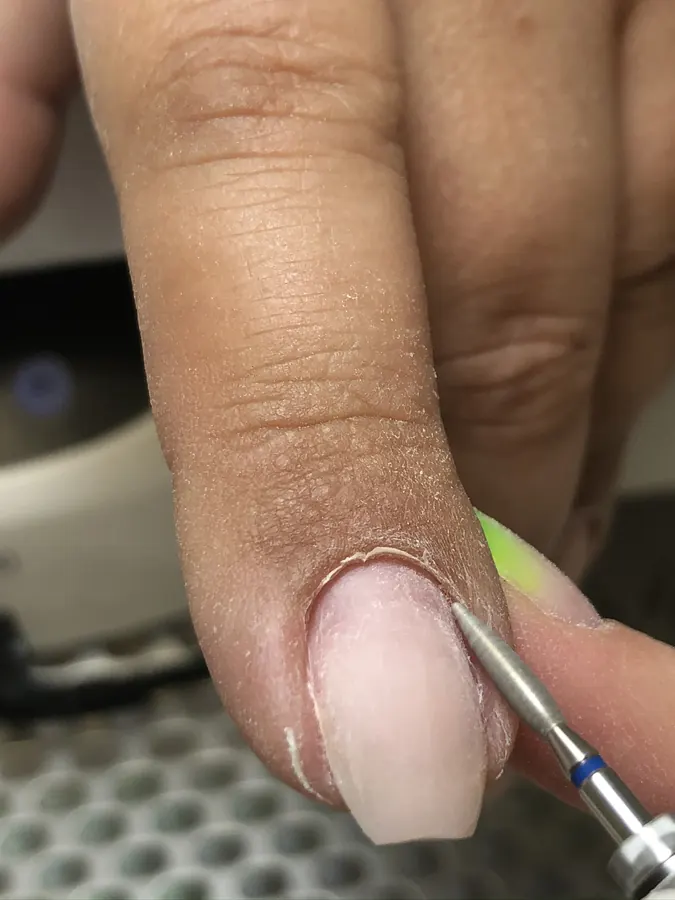
E-file manicure vs regular manicure: what’s the difference?
An e-file (dry, or Russian) manicure is done without soaking. Instead of softening the skin in water and cutting it, a trained technician removes dead cuticle tissue with a small electric file and fine tools. The result is a cleaner cuticle line and polish or gel that lasts longer.
This guide explains how it compares with a regular manicure and pedicure, what the benefits are, and what to look for in a technician.
Regular vs e-file manicure.
Both aim for neat, healthy-looking nails. The difference is how the cuticle is handled and whether water is involved.
| Regular manicure | E-file (dry) manicure | |
|---|---|---|
| Preparation | Hands or feet soaked in water to soften the skin | No soaking; skin and nails stay dry |
| Cuticle work | Cuticles pushed back and cut with nippers | Dead cuticle tissue lifted and removed with an e-file and fine tools |
| Precision | Good on the visible cuticle, harder in the side folds | Reaches the side folds and under the eponychium for a very clean line |
| Polish & gel wear | Nail is swollen after soaking, so coatings can lift as it dries | Coating goes onto the nail at its true shape, helping it last longer |
| Wear time | 1–2 weeks typical | 3–4 weeks typical |
| Regrowth | Cuticles and hangnails often return quickly | Cuticle line tends to stay neat for longer between visits |
| Pedicure hygiene | Often a shared foot bath or whirlpool spa | No foot bath at all |
| Skill required | Basic manicure training | Advanced e-file training; results depend on the technician |
Why clients switch to dry e-file care.
Most of the benefits come from two things: keeping the nail dry, and removing dead tissue precisely instead of cutting it.
- 01
Longer-lasting polish and gel
A dry nail does not swell and shrink back after the service, so gel and polish keep their grip and finish for longer.
- 02
A cleaner cuticle line
Fine bits remove dead tissue right up to the nail fold, so colour can sit closer to the cuticle for a neat, groomed look.
- 03
Fewer hangnails between visits
Removing dead tissue precisely, instead of cutting into skin, helps the cuticle area stay smoother as it grows.
- 04
No shared foot baths
Dry pedicures skip whirlpool foot spas entirely, removing a known source of salon skin infections.
- 05
Smoother heels and soles
An e-file reduces calluses and hard skin with fine control, which is why it is used for advanced pedicures and cracked heels.
- 06
Better for weak nails
Thin, flexible nails are the most affected by soaking. Keeping them dry is gentler on the nail and on the coating above it.
Great for most clients, with the right technician.
E-file manicures and pedicures suit most people, including clients with weak or peeling nails, overgrown cuticles, frequent hangnails or polish that never seems to last. They are also ideal if you prefer a salon that avoids shared foot baths.
The one thing that matters most is training. An e-file is a precision tool: in skilled hands it is gentle and very accurate, but poor technique can thin the nail or cause heat spots. Ask where your technician trained, and speak up if anything feels warm or uncomfortable.

Olga Glavatcaia, Nail Artist
- Trained since 2017. Olga holds certifications in e-file manicure and Russian e-file pedicure.
- Award-winning. 3rd place at the NailPro World Cup 2020.
- Professional products. Gehwol foot and hand care and Akzentz gel systems.
- One-on-one. Every appointment has time for careful, precise work.
What is an e-file manicure?
An e-file (electric file) manicure, also called a dry or Russian manicure, is done without soaking. Instead of softening skin in water and cutting it, the nail technician uses a small electric file with fine bits to lift and remove dead cuticle tissue, then refines the nail fold and prepares the nail plate for polish or gel.
Is an e-file manicure better than a regular manicure?
For many clients, yes. Because the nail is never soaked, polish and gel go onto the nail at its true size and shape, which helps them last longer. The cuticle line is also cleaner and tends to stay neat for longer. The trade-off is that it depends heavily on the technician’s training, so it should only be done by someone skilled with an e-file.
Does an e-file manicure hurt or damage nails?
In trained hands it should not hurt. The e-file works on dead tissue and the nail surface, not on living skin. Damage such as thinning or heat spots comes from poor technique, not from the tool itself, which is why training matters. Tell your technician straight away if anything feels warm or uncomfortable.
Why does polish last longer after a dry manicure?
Nail plates absorb water. After a soak the nail swells, and as it dries it shrinks back. Polish or gel applied to a swollen nail can then lift, crack or chip as the nail returns to its normal shape. Working on a dry nail avoids that.
What is a dry pedicure?
A dry pedicure skips the foot bath. Nails, cuticles, calluses and hard skin are treated with an e-file on dry skin, which gives very precise control and leaves heels and soles smoother. It also avoids the shared whirlpool foot spas that have been linked to skin infections.
How often should I get an e-file manicure?
Most clients book every 2 to 4 weeks. Gel manicures are usually refreshed every 3 to 4 weeks, and hygienic (no polish) manicures every 2 to 3 weeks, depending on how fast your nails and cuticles grow.
Try a dry manicure with Olga.
Choose your service and a time that suits you. Booking takes less than a minute on Vagaro.